Episode 79: What Not To Say To A Woman During An Argument
January 28, 2026
SUMMARY KEYWORDS
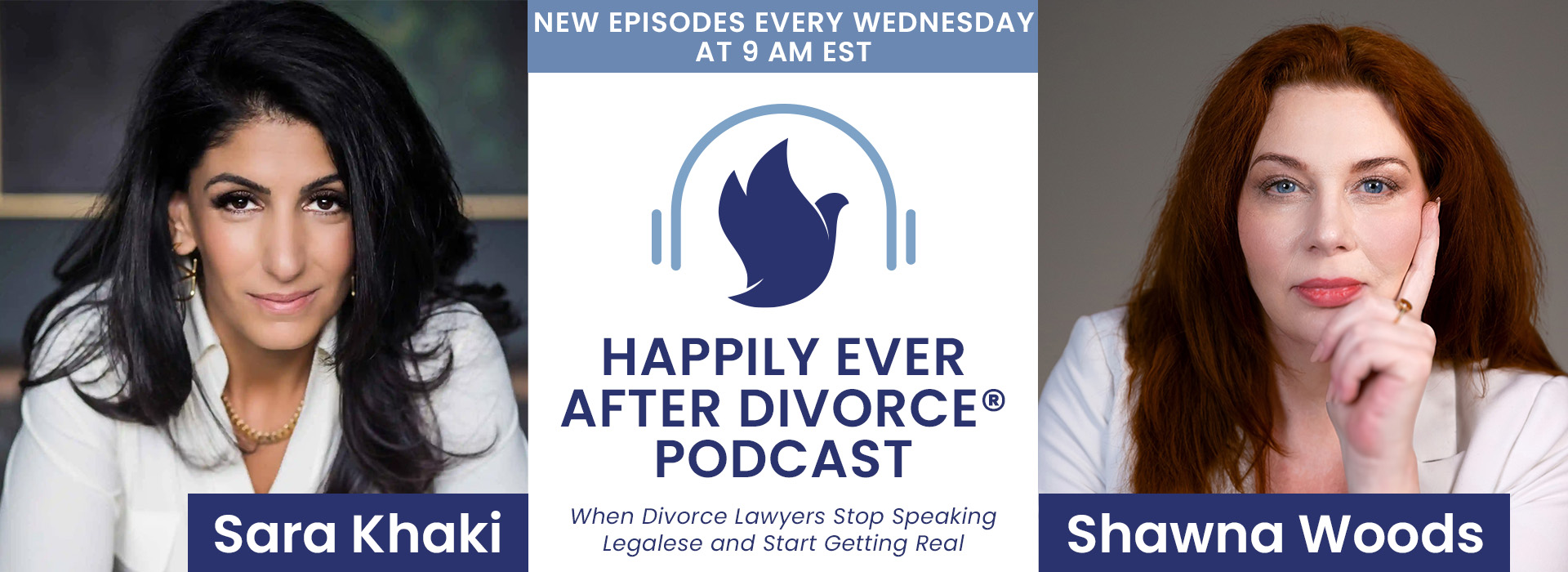
Empowered people make informed decisions that lead to living a life without regret. This is Sara Khaki and Shawna Woods from Atlanta Divorce Law Group. And this is the Happily Ever After Divorce Podcast.
Welcome to the Happily Ever After Divorce Podcast. I’m Sara Khaki with Atlanta Divorce Law Group, and I’m joined by our very own managing partner, Shawna Woods. And today is International Women’s Day.
SPEAKERS
Sara, Shawna
sSara (00:05)
Empowered people make informed decisions that lead to living a life without regret. This is Sara Khaki and Shawna Woods from Atlanta Divorce Law Group. And this is the Happily Ever After Divorce Podcast.
Welcome to the Happily Ever After Divorce Podcast. I’m Sara Khaki with Atlanta Divorce Law Group, and I’m joined by our very own managing partner, Shawna Woods. And today is International Women’s Day. This is the day we’re recording this episode. Probably won’t be the day that it’s released, but we have to acknowledge that because today’s episode, we are going to talk about top 16 things to not say to a woman when you are arguing with her.
Why is it top 16? Well, because we couldn’t limit it to 10, couldn’t limit it even to 15. We could actually probably keep going. Shawna’s laughing already when we’re getting this started. So this will be a bit tongue in cheek, but if women have ever been mad, they won’t be laughing when they hear this. Some of this will actually be triggering. So I do have a trigger alert for women that’ll be listening to this. But Shawna and I basically talked to a lot of the women in our office and with our team and
Got a pool of things that our partners say to us when we’re in the heat of argument that absolutely drives us up the wall and escalates everything even further. So if a woman’s listening to this, hopefully this will be a little bit of therapy, little bit letting you know you’re not alone. And if men are listening to this, then hopefully we’re giving you a bit of a toolbox of what not to do.
Specifically 16 things not to say if you’re in the middle of an argument. Alright, Shawna, you ready? Alright, I’m gonna share my personal favorite. And when I say favorite, I mean most triggering. Mine is get a hold of yourself. You know, you’re already there. You’re trying to get a hold of yourself, most likely. And then when they, something about them giving you the command words, get a hold of yourself, it gets even worse.
sShawna (01:46)
I am ready.
As if they are in charge of this argument and your emotions.
sSara (02:13)
As if they’re not, as if they have a hold of themselves. That’s where it gets really triggering. It’s like, so I am the crazy one and you’re the sane one and you commanding me to be sane is gonna automatically put me insanity. That’s what it feels like.
sShawna (02:27)
That is the implication.
My
First one is a Netsafe thing. You’re the reactive. No sir, I’m reacting to the information that I have in front of me. And if you think that is a bit much, perhaps it’s the information you gave me,
sSara (02:34)
Man.
The problem is nothing gets you to overreact more than being told that you’re overreacting. I might have been reacting just the right amount. It might have been the perfect proportion to the information, but now I’m going to have to go overboard because you just put me there.
sShawna (03:04)
This reminds me of something my mom used to say, and I remember this so distinctly. And it would be, my dad would say, stop yelling. And she was like, you think this is yelling? Man. And they’d ratchet it up. Let me show you yelling.
sSara (03:18)
Right.
Get accused of that as well, of lower your voice. I’m like, I actually thought I was whispering. All right, here’s my next one. Why are you so emotional? Oh, this again, especially for women, those of us who feel like we are strong, we have a good sense of ourselves, we have self-awareness, and we check in on ourselves. And then when somebody says that to you, it’s like they, you feel weak.
You feel like somebody’s looking at you as an emotional weak person and it feels belittling. It also feels like they’re not validating your feelings. They’re not validating what you’re so, through all your emotions, so much trying to express and you’re taking a moment to express yourself and you’re being told that those emotions are not valid.
sShawna (04:07)
And I think that does go to a crux of a lot of fights that men and women do have with each other because men believe, and I’m gonna really put that in quotations, they do believe they are the more logical ones, although that’s not always true. And they believe that women are the more emotional ones. So how to win an argument is to say, you’re emotional. As if emotions do not have valid reasons behind them.
sSara (04:33)
And you make such a good point because it is the feminine and the masculine. And it’s not that the masculine is more logical. It’s that the masculine needs few more data points to make a decision or choice or path in their mind from A to B. Whereas feminine picks up a lot more data points. It’s a lot more open. It’s a lot more open to receiving and hearing and feeling and sensing things.
Whereas the masculine is not, it’s a lot more direct. Everything’s a lot more direct. So to them that comes across as I’m the logical one and you are way too emotional because you picked up on all these other information or all these other things that you’re saying that matter. All right, what’s your next one?
sShawna (05:21)
My next one is a phrase that’s, at you. And of course what that means is in the heat of the argument, they think, again, it goes back to you’re overreacting, you’re out of control, but they’re pointing at you and say, look what you’re doing right now. It’s very belittling. And it goes back to, do you have respect for your partner, even in arguments?
sSara (05:36)
The letter link.
Right. Fighting fair. My next one goes back again to that masculine and the feminine. And this one is, you’re not making sense. You’re just adding too much noise. Getting goes back to how masculine looks at things from a much more direct point of view and is not open for other outside information as much. They don’t pick up on a lot of the nuances, the anecdotes that sits in arguments or sits in
Relationships and the feminine is a lot more open to a lot of other information that’s coming in into the masculine that’s just noise. Whereas to the feminine, this is actually information that is creating my environment that is creating and painting my feelings and they should matter. Whereas the masculine will just look at and say just too much noise. You’re creating too much drama here. And it can be painful to hear that.
sShawna (06:42)
Absolutely. My next one is what I call comparing. And it’s both been done to me now that I’ve done some reflection and done about me. Why don’t you do it the way my mother does it? My grandmother used to clean out the refrigerator every single day. Why can’t you? That was literally said to me.
sSara (07:01)
I mean
Those are fighting words for some of our clients. I’ve had a lot of our female clients, just that is their fighting word.
sShawna (07:08)
Now, why can’t you raise our children the way my mom did? Whatever it is, it’s that comparison to let you know that they think you are less than somebody else they hold that is more than.
sSara (07:22)
And for a lot of women, and not just women have this core wound, some men do as well, it’s the, I’m not enough. Yes. And that’s exactly what, and I think this is what’s valuable for men to hear is these words are in the heat of the argument for you guys, but they are hitting core wounds for women. And one of the most classic core wounds for women is I’m not enough. And some of these things that you guys say to us, such as,
Why can’t you do it the way she did it? Or why can’t you do it the way my mother did it or my sister? What she’s hearing is, you’re not good enough, you’re not enough. All right, next one I have, and this is a classic one, it’s the problem solver. This is when, quite frankly, we are being an emotional mess and we can’t get a hold of ourselves and we are being too emotional or overreacting, whatever it is, maybe all those things are true.
It does not help. Man, it does not help to come in and try to diagnose our problem and try to get us to answer your questions on, well, did you try this? Did you do that? Have you thought about this? Well, why didn’t you do this first? Well, let me tell you what you should have done. We know you’re trying to help. We know you love us and you want to be our provider. You want to be a rescuer. You want to be our problem solver. And in your world,
Your woman should not have any problems because you’re the hero that took care of all of it. In this moment, do not do that. Sit with us, let us throw up all of our problems. Just hold the trash can, as Alison Armstrong says, just hold the trash can for us. Let us just vomit into it with all of our words.
sShawna (09:05)
A really good question to ask when you feel that need to go problem solving because I think there are definitely women, I myself have that need to go problem solving. And I have to take that step back and say, do you need me to listen or do you need me to help resolve this issue? And really asking that question and being sincere in it because going in immediately to problem solving is probably gonna, if it hasn’t already started the fight, it’s definitely gonna escalate it.
sSara (09:33)
Absolutely, and this is one of the things that his sham and I’ve learned to do and it’s really helpful because when he asks me that Now I have also enough awareness that he wants to help me. He wants the problem solved, but he’s holding himself back He’s restraining from going there. He’s going restraining himself from his masculine, which is there’s a problem and You know, I got to help her I got to step in take care of the problem with her and help her with it
And he’s restraining himself and he’s saying, okay, do you want me to listen to you or do you want me to help resolve it? And that gives me the signal, okay, he’s doing his best here. He’s trying to make space for me. And then I can kind of relate back and check myself and say, you know what, let’s just talk it through. What’s your next one?
sShawna (10:21)
My next one is this is your problem you deal with it. Man. So it’s the exact opposite of the problem solver. It’s you’ve created this mess. I’m out. Even if I contributed to this argument, you deal with it now. It’s on you.
sSara (10:36)
So going back to core wounds, men, what we hear when you say that is abandonment. We’re hearing abandonment. And it’s very painful. And again, men have these core wounds too. And I know for a fact that us women, we have trigger words that triggers these core wounds for our men.
This is the one about women. And I think it will be really helpful if men understood that when you’re saying that, what we’re hearing is that you’re abandoning us. All right, this is the next one. This is not you. This is your friends talking. And it feels belittling because they’re basically telling you you can’t think for yourself. You’re not able to analyze and assess what’s going on.
You basically just went and ran your mouth to your girlfriends and now you’re vomiting it all over me. Again, it feels belittling.
sShawna (11:35)
And it’s very interesting because I’ve had some of these conversations with men who’ve come in for divorces and they really do believe it’s their friends. They have this core belief. Say, she started hanging out with this friend who was divorced or she got started hanging out with this friend who was single and they convinced her to talk this way, to believe this way, to think this way. Hey guys, they didn’t.
sSara (11:59)
Sean, I do think that the environment that they put themselves in can affect it if you’re around a group of girlfriends that are super negative about marriage or relationships or partnership or about your husband. That is dangerous, but I agree with you. I think it’s a symptom. I think there’s a something was already wrong in the partnership and then, you know, misery would have found company and it didn’t help.
sShawna (12:22)
But by saying this is your friend, what you are doing to this person is saying you don’t have any feelings of your own. You don’t have any concepts of your own, any ideas of your own. I may go and read a book and say, hey, that was an interesting concept. Let me share this now. But it doesn’t mean that I didn’t put my own thought into it and change it somewhat and say, interesting concept. Here’s also how I build on it in my own life. And now I’m talking to you about it by blaming their friends.
You are making your spouse, your partner an empty vessel.
sSara (12:57)
Love that and I also think that what I register that as, if I was to hear that, it’s that my partner, my husband is not taking any responsibility in this. We’re just throwing the responsibility on friends instead of saying, okay, what did I do that might have caused you to go talk to your friends about it versus coming to me? How did I show up? Here’s the next one. Actually, you’re up.
sShawna (13:25)
Am I? Yes. Okay. Accusations of manipulation. And this is a really hurtful one, think, especially when women are simply trying to get their point across. And maybe we do because our voice is shaking and we’re upset. A lot of times we may tear up and, you know, we’re trying to get our voices across. And it comes across to you as we’re manipulating you because now you’re feeling guilt or, you know, sympathy.
sSara (13:51)
Right.
sShawna (13:53)
And you find that manipulative when all we’re doing was expressing emotions how they’re being felt at the moment.
sSara (14:00)
Feel like a cheap shot? Absolutely. Like so easy to just to tell somebody you’re just, once they’re like making their point, they are not overreacting. They’re not being emotional. They got a hold of themselves. They’re not making noise and they’re actually making an argument from connecting A to B to C to D. And when you’re stuck and you don’t have a counterpoint to it, then you throw this cheap shot of, man, that makes sense.
She’s right. You’re being manipul-
sShawna (14:33)
I must have been manipulated.
sSara (14:35)
Because I didn’t win. Again, that’s what we’re hearing, men. We’re not saying that we’re right. We’re just saying this what we’re hearing. Okay, I’m up. There’s no winning with you. That one sounds like going back to core wounds, you’re damaged. You’re hopeless, you’re damaged. You need fish.
sShawna (14:58)
I can’t do anything to help you because there’s simply no help for you.
sSara (15:03)
Exactly, exactly. I’m not taking any responsibility in this. I’m not participating in this because there’s just no winning with you. You’re crazy.
sShawna (15:11)
Mine’s similar, and I’m gonna use this exact phrase as it was used on me and then explain it. Mine is, look at the brain on Shawna. Man, that one still sticks with me.
sSara (15:21)
Shorter.
Man, look at
The brain on Shawna. You’re pretty smart.
sShawna (15:28)
That is that that’s compliment coming from you but you know, there’s fights that I had 15 years ago and again back to that kind of manipulation I am at we were just talking about These are in times when you are making your points and you’ve made your point and there’s no way out of it and they have to look at it and say well Crap, I’m stuck. So what do they do and it may not be that phrase but it Well, aren’t you smart? Right. I’m she that smart cookie
You know, it’s, okay, I got something right, so now you have to belittle me like I’m a five-year-old and say, good job, would you like a star? It’s that cheap shot. It’s a cheap shot, and it’s done out of the place of anger and, you know, really that, obviously, I’m always right, therefore I have to give you this one.
sSara (16:02)
Yeah.
Exactly, exactly. Instead of just saying, man, you made a point and it gave me a pause, you’re attacking them. All right. The next one is, why are you crying? And I have to say it in that voice because there’s a different way of saying it that gives you a different result, which is, why are you crying? Versus, why are you crying?
sShawna (16:41)
Well, there’s a distinct
sSara (16:43)
There’s
A distinct. One is, care that you’re crying. The other one is, I am so annoyed that you are crying. Well, listen, listen, this is the problem, guys. This is the problem. You want women, especially at this day and age, who are feminine. You are done with women who demasculinate. You are done with women that try to out alpha and outmasculinate you. And when you find us being feminine, which is we are vulnerable,
We have emotions. We can be a bit more sensitive, right? We can be more sensual. If we express that, you basically shame us for it and make it look annoying that we’re being all those things. So what would you like? Would you like to have a hard woman looking dead in the eye with no emotions, looking like she’s dead inside and having no feelings towards you and not a single
Tear comes out of her eyes when she feels like, you know, her love is falling apart. So think about that.
sShawna (17:50)
Yeah, because what you really convey, because when we say that, why are you crying, don’t we usually say that to a two-year-old? Why are you
sSara (17:58)
I am so guilty of that. Now that that’s a moment of self-awareness right here.
sShawna (18:04)
It is empathizing of your relationship. You are treating them like
sSara (18:08)
I’m
About to say look at the brains on Sean I like that big word you just used
sShawna (18:12)
Yeah,
Well apparently I can’t say it correctly today. I am a little under the weather.
sSara (18:16)
That’s exactly it. That you’re looking down at them as a toddler. That’s having a temper tantrum. All right. What’s your next one? Yes. First of all, yes. Yes, I do.
sShawna (18:24)
You need therapy. First of all, we all-
I’m glad that you brought that up should we go together because I think maybe we both need it thanks for saying that really it is that it is your fault don’t bring this to me you go work this out with somebody or the crazy that you go pay somebody a professional to work this out with and then come back to me whole.
sSara (18:48)
Again, it’s abandonment too, because what you wish you would hear is, you know, I’m concerned about us, we should go to therapy. Yes. Which is where Parker should.
sShawna (19:00)
That’s an excellent way what we want to hear. Let’s do this.
sSara (19:02)
That’s what we want to hear. Let’s do
This together versus, listen, we just went from being a team to two of us and one of us is crazy and that one is you and that one needs to go to therapy. That’s what that means.
sShawna (19:16)
I would rather hear that than just do the same.
sSara (19:19)
It’s a little bit more forward, which I can see why you would appreciate that. All right, I got the last one. You have another one. Okay.
sShawna (19:27)
I
Okay. I say it’s my favorite for last because this is given to me by someone in our office. That’s your inner Bravo.
sSara (19:36)
Man, we won’t mention names, but we know the people in our office that love that show. Well, that love that network.
sShawna (19:43)
So we’re really what that means that that’s your inner bra though that’s your inner whatever it is you like to do you’re the one the TV shows you like to watch.
sSara (19:51)
The reality TV shows drawn
sShawna (19:54)
The drama, media that you’re consuming. Again, it’s a cheap shot at something they may not like that you do or something that they may be your secret pleasure that you do. Your guilty pleasure and now they’re taking it and turning it and making it a negative instead of celebrating that’s something, gosh, I know she likes to do. It is an extreme cheap shot.
sSara (20:05)
You’re guilty pleasure.
It is a cheap shot.
sShawna (20:20)
It devalues everything you just said to them. So they get to say, know what, everything that came before that sentence means nothing to me because I’m just comparing it to a silly show.
sSara (20:32)
It’s
The same one as this is your friends talking. Yes. Now, this episode is meant for a toolbox for the men, but I’m going to bring a little bit of light to this for both sakes of men and women. Men do really take responsibility for the environment that they put their marriage in. And I do think that for us women,
As triggering as those words are, this is your friends talking, the one I brought up, or this is your inner Bravo, if we were to just look at it as women from the man’s perspective, they do look at those reality TV shows of the housewives that are always fighting and, you know, what’s keeping up with the Joneses with their expenses and lifestyles and, you know, changing spouses every so often.
Also with friends that they find are not friends to the marriage, they do see them as threats to the marriage. And it’s not helpful that the way they bring it up, right? There is a conversation to be had from the husband or from the man and the partnership to the wife or to the woman to say, I don’t think these things are a positive influence on our marriage or on our family or on our partnership, but throwing it at us.
As dirt and a piece in an argument, in heated argument, it’s triggering.
sShawna (21:59)
It’s unhealthy communication. It’s unhealthy communication. I think that’s really the point of what we’re trying to get across is these words that are making us upset that are not helpful to the communication, who are not helpful to furthering our relationship, we could just title this episode, Unhealthy Communications. Right, right.
sSara (22:18)
And I will say, I’m such a fan of men who love to provide for their families and fight for their families and go above and beyond to provide and protect for their children and their wives. I do understand the psychology of where this is coming from. All this entire list comes from them, which is a place of, can’t actually trust you right now in a conversation. And a man is always in the masculine assessing.
Is this a person that can be trusted with information? That is an instinctual thing they do, but that is the animal instinct of them. We’re asking you men to bring the human awareness of when you’re leading with your animal instinct, you’re putting us in a much worse place than when you found us, and you’re not going to be able to get results, and we know you’re about results.
sShawna (23:10)
I love that you put it that way. And onto, I agree, I think that most of us are fans of that protector, that caregiver, that one who’s like, this is my family, I’m going to take care of it. Love that, taking that step back and that beat, I think is where we’re coming from in this kind of tongue-in-cheek way to say, am I about to communicate what I want to communicate in this situation?
Or hey guys, there’s this coming from deep within your feelings and you need to get ahold of yourself. Right. Right.
sSara (23:43)
Alright, Shawna, I got the last one and this one to me is just like I feel it in my heart and it can crush my heart. This one doesn’t even trigger me. This one just makes me so sad because you know how much I love partnership and I love marriage. This one is I’m sick of this argument. I’m done. This is hopeless. And I feel this one because I think that hope, even though we’ve talked about this before, is not a strategy to fix
A marriage that’s in problem or partnership that’s having problems, but hope is required. It’s needed, emotionally needed to give the brain the juice to figure it out, to build the strategy of how do we get ourselves out of here? And when you crush the hope inside of a woman like that and you just say, is hopeless, and you abandon her in the middle of an argument and say, you’re done. I’m abandoning this argument. I’m abandoning this mess.
Because this is hopeless. You’re pulling the rug underneath her. You’re crushing her heart by making her feel like there’s no hope left here. And because we will put in the emotional labor to get things back. But when you tell us like there’s nothing here and it’s hopeless, you’ve crushed our hearts. And the analogy I have is two people going into two kids going into the playroom, making a mess out of the toys.
And then the other kid saying to the other one, this is too much of a mess for me. I’m going to leave you in here in this playroom with this entire mess and you sort it out and clean it up before the parents get home.
sShawna (25:23)
And there is something to be said. I agree completely with you. I hate it when somebody says, and I’m out, you know, I’m just, I’m walking away from this argument. There’s a difference between putting a pause on your conversation because you’re both too heated. Yes. And saying, I am done with this conversation. There’s a huge difference between the two. The two of you in your analogy, we’re saying, we can’t tackle this right now. Let’s close the doors. We’ll come back to this tomorrow.
sSara (25:53)
And that I would be able to hear. This isn’t going anywhere right now. We need to regroup on this. I need a pause from this versus this isn’t going anywhere. I’m done. This is hopeless. All right. Well, guys, that was our top 16 or maybe even more. We lost count somewhere, but hopefully it was some nice therapy for women and a nice PSA for the men out there.
Thanks for listening to the Happily Ever After Divorce Podcast. If you’d to learn more, go to atlantadivorcelawgroup.com/resources.
Discuss Your Options With Our Atlanta Divorce And Family Lawyers
Our experienced Atlanta, Georgia divorce and family lawyers understand that divorce may be a complicated, emotional time for you. Many important decisions need to be made that consider your current situation as well as your future.
An attorney can work to help you emerge from your divorce in a better financial, legal, and personal situation than you may have imagined. Call today to schedule a consultation.
Let’s Get in Touch.
Subscribe to Our Newsletter
Learn the latest on divorce & child custody
Subscribe to Our Newsletter
Learn the latest on divorce & child custody
 January 28, 2026