Episode 47: Enhance Your Relationships Using Love Languages
January 28, 2026
SUMMARY KEYWORDS
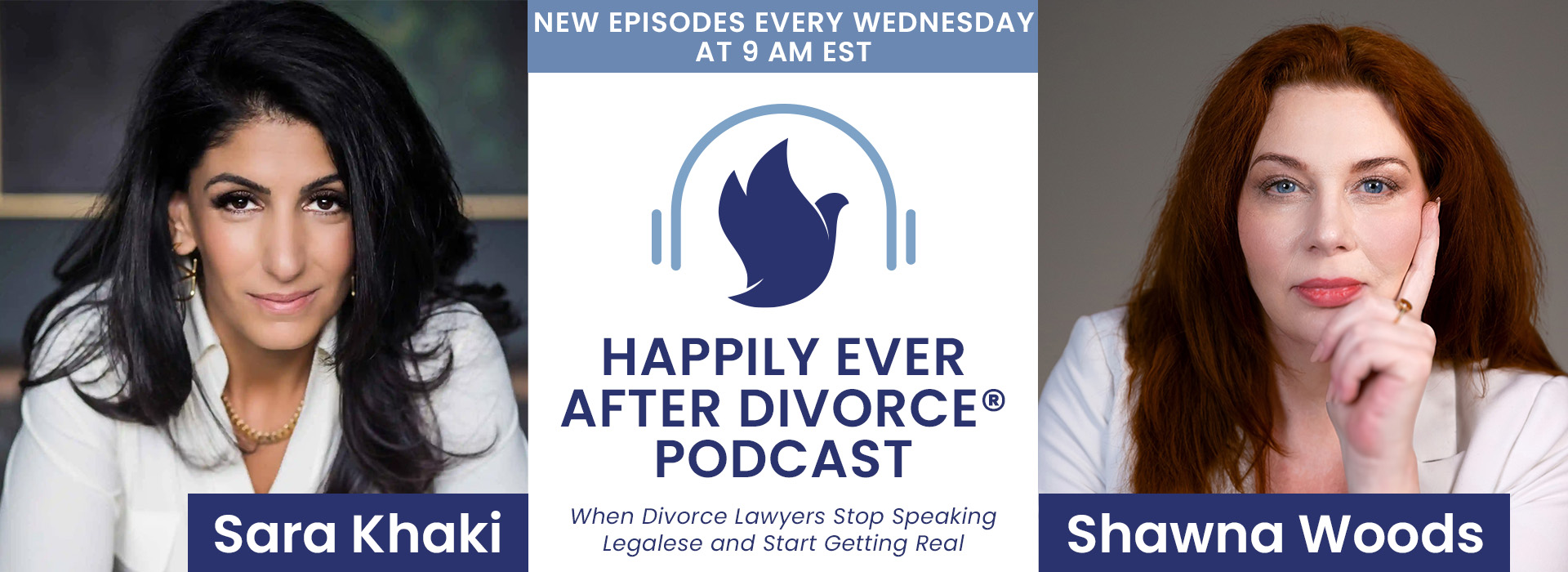
Powered people make informed decisions that lead to living a life without regret. Is Sara Khaki and Shawna Woods from Atlanta Divorce Law Group. And this is the Happily Ever After Divorce Podcast. Welcome to the Happily Ever After Divorce Podcast. This is Sara Khaki with Atlanta Divorce.
SPEAKERS
Sara, Shawna
sSara (00:05)
Powered people make informed decisions that lead to living a life without regret. Is Sara Khaki and Shawna Woods from Atlanta Divorce Law Group. And this is the Happily Ever After Divorce Podcast. Welcome to the Happily Ever After Divorce Podcast. This is Sara Khaki with Atlanta Divorce.
And I’m joined by very home managing partner, Shawna Woods. Shawna, today we’re going to talk about the famous book by Gary Chapman called The Love Languages, which I don’t even know if many people know that those love languages come from a book, but it’s now become sort of popular thing to talk about one of your love languages and what’s your partner’s love languages. I think the conversation today will mainly be about
What are love languages we personally have and how we want to receive them and how we want to give them and how it shows up in our partnerships and in our relationships. First, I was going to go through the five main love languages as we know them, which is one, act of service, two, physical touch, three, words of affirmation, four, quality time, and five, receiving gifts. Shawna, through
Your experience as a divorce attorney for the past 20 plus years and your own personal life. How has love languages and these five different ways of providing love and receiving love showed up in what you’ve seen?
sShawna (01:32)
Well, I think when there’s a dysrecord between people it’s really because they are not either they’re not showing love because they’ve fallen out of love or their love languages are different from each other. One’s love language may be acts of service which I’m you know doing for you picking something off your plate making sure that it’s taken care of. Well someone else’s maybe physical touch and if those two don’t mesh if somebody actually does not like physical
But that’s how the other person needs to receive love, then you definitely have a disorder.
sSara (02:08)
Do you think that if two people do not have compatible love languages, that means they’re incompatible for each other?
sShawna (02:17)
Not being a psychologist, I’m not going to completely answer that as this is an expert on it. No, what I think is given the experience that I’ve seen, people can learn to give love in the way their partner needs to receive it, but it does take active learning and it takes a complete inventory of your love and really good communication with each other about what you need. And the first thing I think is,
You have to understand what it is your love language is before you can tell your partner how to give it to you.
sSara (02:53)
And I think there’s so much in what our love language is that plays a part from what we received in our family structure or in our unit growing up, right? So so much of how love was received and how love was given plays a part in what these different love languages mean to you. Like for instance, for me, of service can be a hard one for me to receive as a love language at times.
Can come with the idea for me, don’t know where this comes from, but that I can’t take care of it myself, that I’m not strong enough to handle it myself. So active service is a tough one, it can be a tough one for me to receive, but then receiving gifts, I have no choice. Like I know for instance, I have an easy time giving words of affirmation, but I don’t always have an easy time giving physical touch. So it really just depends, you know, a lot on
What I think your how your family expressed love gave love and how you were taught to receive love on how it’s showing up. So I think a lot of this might be a lot of it might be more nurture playing part than nurture with what we’re struggling with giving and receiving. So to kind of answer my own question on the compatibility part, think a big part of a partnership that works is first knowing what are your own love languages.
Being very clear on where does that truly come from? Where did you develop that love language? If active service is a big love language to you, is that really your love language or is it something that you just saw in your family and you adopted it? Then second, to give a very clear formula, think is be very clear on what’s your partner’s love language. I think in the early days of marriages, you see a lot of couples struggling because one party feels like they’re constantly giving and while the other party doesn’t feel like
They’re receiving anything. And it’s just as simple as they’re not even seeing the acts of love. And it’s two ships of the night just crossing each other and not even recognizing the other. So I that’s a critical part. And then if it’s not necessarily a match, are you willing to give love in the form that it wants to be received by your partner? And at times are you willing to receive love in the form that your partner wants to give it to you?
You
sShawna (05:20)
I agree with you that it is an art term. And one of the things that is how did you receive love in your family or how did you not receive love in your family? For a lot of people when they talk about acts of service, it’s hard for me as well. Think, although I’m gonna say I like all of them.
sSara (05:38)
I would turn down any of these. I’m gonna turn down any of them.
sShawna (05:42)
But the acts of service is the hardest for me to receive as well. Simply because I was also raised a very independent, very do it yourself, why can’t you do this yourself kind of in way. And so it makes us uncomfortable. But I do think that once you’re in a loving and caring relationship and it’s expressed to you, do you understand I want to do these things for you? I want to take this off of you so that we can do things together.
Then I think it can be a really beautiful way to explore maybe things that you didn’t necessarily think of as your love language. And for me, quality time, it’s over gift giving. I was in a relationship where the person’s act of love was gift giving and I was like, I want quality time and those two just couldn’t match and couldn’t make that work. And I really do think that it’s
We always want to give what we think we should be receiving. Of starting to think about it from their perspective and saying, they’re not going to appreciate this ring. What they’re going to appreciate is a vacation where we spend time together.
sSara (06:53)
And that’s where lot of these marriages fall into trouble. Absolutely. It’s when we see a spouse come in and they’re telling us all the wonderful gifts that they’re buying the other spouse, all the money that they’re spending on the spouse and then they claim the other spouse is completely unappreciative. And then we dig into it and you ask some questions, you’re like, well, you haven’t spent time together in a really long time. Perhaps that’s her.
You know, that’s her love language and that’s what she really wants to receive to feel love. But we are usually, I think our animal instinct is to give love in the form we want to receive it. But if we were to be more clear on what does the other person actually perceive to be love and can I be a provider of that? Do I want to be a provider of that? Or have a higher chance of success all around? Now on the parenting.
Part where what our parents teach us to receive and not receive. I think that’s also really important because for me, understanding that when somebody is doing an act of service for me is them loving me versus them looking at me as somebody who can’t independently take care of it myself completely changes my mindset on being able to receive it. That’s why I think that communication with your partner of understanding that this is how they want to give you.
Love and that when they’re taking care of something for you, it’s not in any way belittling your abilities, but more a form of love. I think you’re much more likely to be able to receive it.
sShawna (08:29)
I agree with you. You know, we often hear things like, well, I’ve provided this home, I’ve provided this family, provided for this family. Where does that come in? Is that access service? And I think we also have to look at when we’re talking about love languages, are we taking for granted the love language that they’re expressing to us? A lot of times it’s like, well, that was what you were supposed to be doing, correct?
Yes, I am supposed to be in this marriage and this relationship that we founded together. That was my role that I’m taking on. But it’s also an act of love. Because if it wasn’t an act of love, what are they doing it
sSara (09:13)
I think you nailed it on so many couples and this is going to sound stereotypical but we see a lot where you have one spouse and it very commonly can be the husband who has worked really really hard to prepare to provide a certain lifestyle for the household and through an agreement and deal making with the two spouses the wife decided she either want to
Give up her career and stay home and take care of the children so he could go out in the workforce. And what happens is a lot of times at some point after he has provided this entire lifestyle, the home, the cars, all the things, he feels a lack of appreciation. Yes. And he feels resentful towards it. Does not understand that all these acts of love that you can claim it under gift giving.
Perhaps accessor. Why was the why is this not being met with appreciation? And it turns out her, you know, I’m going with this. She wanted the quality of time, the quality time and was hoping that if she was to do her part and support him at some point in this journey, she would get the quality time.
sShawna (10:11)
Good service.
Absolutely. We can flip it as well. Yeah, if we’re sticking with this, you know example of very traditional marriage when you have the woman who’s at home who is taking the kids everywhere. She’s a taxi cab driver and she’s you know, the boo-boo fixer and she’s keeping it, you know, a wonderful house. That just doesn’t mean housekeeping, but all of the intricate things that we do now to support our children and to support somebody who’s in the workforce and she can feel very
Take advantage as well because is that considered your act of service or again, what you’re quote unquote supposed to do. That’s your job, that’s your role. And I think if there’s one thing that I would recommend is to both take a step back and see these as acts of service, but also use another love way, which is words of affirmation. I see you. Thank you so much for providing this family.
And I mean that both ways, right? Thank you for our financially providing and thank you for being the caretaker and the caregiver and the one who keeps it together at home. Right. Right. And I think if you just take that moment to step back and say, how can I meet you? You know, I’m not going to say halfway. How can I meet you 100 %? We’re both giving it 100 % on your love language. Then, you know, we probably see a fewer divorces.
sSara (12:00)
You know what you just gave an example of communication. It sounds simple the way Shawna is saying it, but it takes so much honesty and vulnerability and ability to face yourself because before you can have this conversation with your partner, there’s a moment of truth you have to have with yourself because you most people
Want to claim their love language to be the one that they believe is acceptable and safe. Yes. And will be well received by their partner because that’s what they was taught to them. Right. Yes. Like this is the honorable love language to have in my family, the honorable love language to have is office service. And my family, words of affirmation, they give it, but it’s considered cheap. And the upbringing of my generation, words, words are cheap. Let’s show some work. Right.
sShawna (12:54)
The proof is in the getting.
sSara (12:55)
But it took me a lot of personal development to actually realize that I value words of affirmation over active service. And that felt shameful because it felt like that’s such a cheap need to have words of affirmation. But when I dug deeper into it, I realized that it’s not just words of affirmation from anybody. I don’t want words of affirmation from the stranger down the street. I don’t want words of affirmation from people in my peripheral network.
I want words of affirmation from my people. I’m going to ask the ones who might be the most garbage to actually even give it right. And I think that kind of honesty and realizing that you have a love language you may initially claim coming into your partnership or friendship or relationship, but it may not be your true love language. Your true love language might actually be one that
sShawna (13:29)
Closest.
Your
sSara (13:53)
Is sitting somewhere deep down inside of you when you’re guarding it because something about it feels shameful to you because you were taught as a child that this isn’t a valuable thing but you might actually want it.
sShawna (14:02)
Thing to receive.
Absolutely. I can very well relate with the words of affirmation. Grew up in a very stoic area. Strong, silent type was very much valued. And, you know, there just wasn’t a whole lot of affirmations. And I too struggled with when somebody would use that. Is this real? Why are you pumping up my ego? What do you want?
sSara (14:32)
Great camera.
sShawna (14:32)
You’re trying to sell me something. It really felt artificial and false to me in the beginning. But you’re right, I do enjoy them now with very close people is because you develop that honesty and trust with each other. And isn’t that what love is about?
sSara (14:49)
Well, I think it’s, now that you’re mentioning that, think you and I are probably more likely to bring people really close to our lives who, when they give the words of affirmation, would mean the world to us. And those are probably the people that would be the closest to us. People who would use words cheaply probably never get to be that close to us because we value words of affirmation highly. So if you’re going to be very close to me, your words are going to be
Meaningful words are going to have depth to them. And so I think that is interesting also to see your inner circle. And that might tell you something about your love language because your love language might mean a lot more coming from your closest people because subconsciously you might have picked them because they are the ones who can actually meet that love language with the highest regard in your life.
sShawna (15:43)
Very thought proof.
sSara (15:46)
There’s also a trick to figuring out your love language. There’s actually a, I believe the book by Gary Chapman gives you your love language profile so you can take a simple quick survey and get it. But I do think that to go a level deeper than just knowing I’m words of affirmation or I’m receiving gifts or I’m quality time. What there’s a, there’s a niche within that, but quality time is that quality time with
One person is that quality time with the group is that quality time with yourself? There are times when the biggest love language to sham can give me is is providing an environment for me where I get to have quality time with myself and that is Huge and it might be a mix of acts of service in there. Yeah, but it is a big gift and I think knowing You know, what exactly are we talking about when we’re saying?
This is my love language, taking it even deeper than that. What does it look like? Give your partner or your friends as much information about you to set them up for success in this because there’s nothing more disappointing in a relationship, friendly or romantic. When you think you’ve given them all the information, they think they have all the information and they are so disappointed when they miss their mark and don’t get to…
Make you as happy as they want to make you.
sShawna (17:14)
I think it’s very important what you said in relation to communication, right? Because exactly your definition of quality time may be completely different than someone else’s definition of quality time. Same with physical touch. Yeah. Right? When we say my language is physical touch, that doesn’t always mean intimacy. Right? Right. It may be a hug. It may be a quick, you know, touch as you walk by each other. Right?
Quality time may be, in your mind it might be, all right, I need some alone time. And someone else’s mind it may be, I really like cooking dinner with you. That’s a really good quality time for me, I enjoy that. So we do have to take apart what we think when we think of certain words. We think we all are expressing to each other exactly what’s in our head. But the word and the connotations mean completely different things to different people.
And so really breaking it down and say, no, no, I already told you I need quality time. Isn’t enough. Right. If you’re really going to build a relationship, a very strong, you know, foundational relationship, you really need to be okay. Now, what does that mean? You’ve told me words of affirmation. What does that mean? Do you want me to tell you about your character? Do you want me to compliment what you’re looking at? How you’re looking, what you’re wearing? What is the
Affirmations that you enjoy, that you want to hear. Same with receiving gifts. I’ll be very honest, of course, I’m not going to turn down a gift. At the same time, I like the smaller gifts that were thought of like, I was out, I saw this and I thought of you. Rather than, me buy you something grandiose because I want to see something grandiose on you.
sSara (18:57)
Thanks.
It’s such a good point because there are definitely people who like to receive a gift that is something they would never buy for themselves. Yes. And they would never even, and it’s a surprise element. And then there’s some people that hate that and they say, why would you pick something that I don’t want? I’ve never expressed to you that I want. And let me give you a list of things, right? Let me give you my Christmas list. Yeah. So it’s very, very different.
sShawna (19:28)
Rachel from Friends.
sSara (19:33)
I do think most things in relationship are not that formulated, but I actually think love languages can be a bit formulated. And this is where we can really take a moment and have a big win. You take a moment with yourself, become very, clear. What is your love language? Yours, not the one that was handed to you by your family, but the one that’s deep down inside that you haven’t brought out to the light yet.
sShawna (19:44)
Right?
sSara (20:03)
Allow yourself, allow yourself to receive it. I think that is 50 % of the work right there. Right? Yes. I am worthy to receive and accept this to be my love language. Step one. Step two, help your partner decide what it’s not for them. And then see where that
sShawna (20:10)
Absolutely.
sSara (20:31)
Compatibility and incompatibilities are and work around that. I I really do think that if you’re very clear that, his love language is act of service and that’s what he wants to give to me, I can receive that every now and then. As long as I can also get my love fulfilled.
sShawna (20:50)
Of words that have
Absolutely
sSara (20:55)
Thanks for listening to the Happily Ever After Divorce Podcast. If you’d to learn more, go to atlantadevorceloggroup.com forward slash resources.
Discuss Your Options With Our Atlanta Divorce And Family Lawyers
Our experienced Atlanta, Georgia divorce and family lawyers understand that divorce may be a complicated, emotional time for you. Many important decisions need to be made that consider your current situation as well as your future.
An attorney can work to help you emerge from your divorce in a better financial, legal, and personal situation than you may have imagined. Call today to schedule a consultation.
Let’s Get in Touch.
Subscribe to Our Newsletter
Learn the latest on divorce & child custody
Subscribe to Our Newsletter
Learn the latest on divorce & child custody
 January 28, 2026