Episode 94: All We Need Is Love… Is It Really Though?
January 28, 2026
SUMMARY KEYWORDS
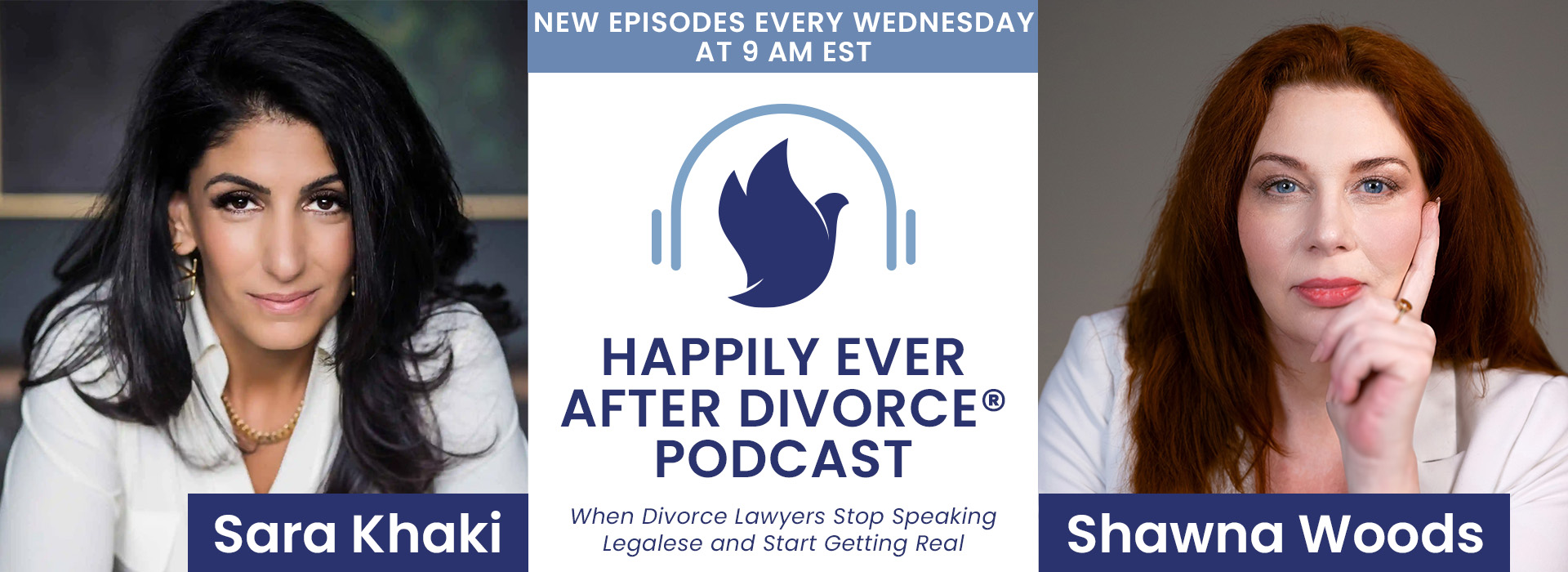
Empowered people make informed decisions that lead to living a life without regret. This is Sara Khaki and Shawna Woods from Atlanta Divorce Law Group. And this is the Happily Ever After Divorce Podcast. Welcome to another episode of Happily Ever After Divorce Podcast. I’m Sara Khaki with Atlanta Divorce Law Group. And I’m joined by our very own managing partner Shawna Woods. Shawna, today we’re going to talk about love. And as that famous Beatles song goes, all we need is love.
And we’re kind of poking at that a little bit. Is that true?
SPEAKERS
Sara, Shawna
sSara (00:05)
Empowered people make informed decisions that lead to living a life without regret. This is Sara Khaki and Shawna Woods from Atlanta Divorce Law Group. And this is the Happily Ever After Divorce Podcast. Welcome to another episode of Happily Ever After Divorce Podcast. I’m Sara Khaki with Atlanta Divorce Law Group. And I’m joined by our very own managing partner Shawna Woods. Shawna, today we’re going to talk about love. And as that famous Beatles song goes, all we need is love.
And we’re kind of poking at that a little bit. Is that true? Is all you need in a healthy functioning relationship that’s going to test, stand the test of time, love? Does love solve everything? What do you think?
sShawna (00:51)
That’s a great question. It really is.
sSara (00:53)
At
You didn’t say it depends. Listen.
sShawna (00:56)
A usual answer. No, I don’t. I don’t think it depends at all. I think when we’re young and we are first discovering other people find us attractive and we find each other attractive and and we are in love and then we think that’s all that we’re ever going to need because you get this person on a deeper level than you’ve ever gotten a person and they understand you and you feel like your soul mates and
That’s wonderful. That it can be a fantastic start to a relationship. But there are many people that I think all of us have loved and probably still do love on some very deep level that we are no longer in contact with. We are no longer in relationships with, because all we need is love is not entirely accurate at all.
sSara (01:55)
No, I agree. You know, I’m happily married and have been with Shann, my husband since I was 18 years old, since 2002. So we’ve been together for a long time. And I can definitely say that, you know, when we first met, I felt that immediate sense of overwhelming feeling that, you know, we all describe as love, but it hasn’t been enough. Absolutely hasn’t been enough. And I think that we fall into the trap
Of getting out of relationships when we expect that to be that enough and we put this and impossible standard on love that love should solve all love should be enough all we need is love it really is not i think love brings you together but love won’t keep you together and there’s i’ll go through the other things that i think you need in order to keep nurturing that love.
Because that’s what that love needs. It needs to be nurtured, it needs to be fostered, and it needs other elements to keep it going, but by itself, it will not resolve everything. It will not be all that you need. If anything, one of my favorite thought leaders or authors, Mark Manson, who wrote the book, The Subtle Art of Not Giving an F, and he has another really funny title. I’ll mention it when it comes to mine.
But he has this quote where he says, love doesn’t fix relationship problems, it amplifies them. So if you are deeply in love and it’s hot and heavy, you’ll actually see that your fights can be just as hot and heavy. The ups and downs can be just as much. And learning how to balance that, how to bring some sense to that, how to bring some commonality to that, how to bring some boundaries and
Rules of play to that and working together to do that is a huge part of making a relationship work. Hopefully, love leads you to partnership. That’s the hope. But when it doesn’t, love will not be enough. Hopefully, because of love, you want to do the work that leads you to partnership.
sShawna (04:09)
I would go out on a limb and say, if you don’t do the work, if you all you have is love and you don’t have the other things that we talk about and we can get into the trust, the respect, the same values, the same goal. If you don’t have those, but you think you’re in this relationship come hell or high water because you’re in love with this person. Most of the time those relationships, just what Sara said, those fights get really hot.
And you don’t have the respect and you don’t have the trust and they lead to abuse. You lead to these crazy insane stories of either physical or emotional mental abuse because you’re stuck with this person who you really don’t have that bond with, that stronger bond with, but that you loved.
sSara (04:59)
I think this is a common problem we see in many things, not just with the issue of love and partnership, but I think that growing up, whether it’s our culture or society or just humanity across the world, sells us these stories, right, to get us to follow a certain path. And I think the story of love is one of them, that, you know, two people will meet at an age and they will fall in love.
And they’ll live happily ever after. Well, obviously given the tagline of our firm and our podcast, happily ever after divorce, we know that that’s not the full story. We know the work actually begins once they get married. And that’s when happily ever after happens is when you continue to work on it. But these stories, what they do is they create a sense of entitlement in us that we’re not even aware of. They create a sense of entitlement of how relationships express the work.
What our reality is supposed to look like. Mean, it’s the same thing that so many young people are facing with today. Mean, our generation was told, work hard, go to good school, get a good degree, and you will live the American dream. And that’s turning out, and there’s a large generation that feels very entitled to that and is very disgruntled and demoralized because that’s not what they received. And now the next generation is responding
To the falsity in that story, right? And I think we’ve kind of seen that from a society perspective with relationships. Number of generations were told, be a good girl or good boy, and you’ll grow up and you’ll fall in love with somebody worthy of you. And if you were good, they’ll take good care of you and you’ll take good care of them and you’ll get married and you’ll live happily ever after. Or you’ll have a partner for the rest of your life.
And that didn’t turn up. That story created a sense of entitlement as well because a number of generations decided that they could have these relationships, these fulfilling relationships without having to do the work past love, with past finding love and found themselves demoralized and ended up, a lot of people ended up probably in divorce that could have worked it out if expectations and that sense of entitlement had been different.
Because it’s very hard to shift from love is supposed to be enough to, well, this is going to be my life’s work. It’s a very hard shift to make. And that could be something that breaks a lot of marriages. And then now we’re seeing the next generation challenging marriage, challenging, the idea of marriage. And it could be maybe because of generations before them, you know, there were divorce rate or how many people were badly hurt in these relationships.
And they’re watching that, or they had these relationships that they’ve seen in their family members that scared them away from it. So overall, I think it’s interesting to kind of poke hole at the story of love and what it does to us when we hear it prior to age of seven, when our subconscious mind is still being formed. So what we’ve learned, I’m not a psychiatrist or psychologist, but done enough personal development as you have, Shawna, to know that
What they will we’ve read and have been told from psychologist and psychiatrist is that up to the age of seven is when eight seven or eight is when your subconscious mind is forming and some stories you’re told and the belief systems that are being introduced to you go straight to your subconscious and they create your belief system. So it is very hard if that’s if you’re watching Disney movies, you know, and you’re watching reading
These fairy tale stories or even as a little boy watching, listening to your father or your mother or whoever, an adult in your life, explain to you how love works and how relationships work. And they’re trying to simplify it as much as possible for you so that your mind can comprehend it. And it just really comes down to you’ll find somebody who you love and then you’ll be with them forever. And that becomes your belief system.
That could really set you up for failure is after you grow up past that, you don’t start challenging what are my stories, what are my belief systems that are creating a sense of entitlement in my relationships and making me constantly putting me back in a place where I’m getting hurt or I’m hurting somebody else.
sShawna (09:40)
What you said was just so important and powerful when you talk about the subconscious era because a lot of times what we as adults exist on we don’t think about what’s going on subconsciously with us. We don’t think about how we got to where our thought process are unless we’re working on it the way we are working on self-improvement all the time. But when you talk about subconscious a lot of people
Go with their guts or they go with their feelings they don’t even know why and that subconscious you think is fate. They in here they feel the same way well it probably because you’re exposed to the same things as a child it was probably because you know the the man had the fairy tale too right his job was to come in and rescue his job was to in and as soon as he rescued you and you were his his job was done.
sSara (10:15)
Right?
And you feel entitled to that story as well.
sShawna (10:39)
You feel entitled to that story. He feels entitled to that story. We all feel entitled to kind of a ball of goods that we were sold, right? It’s not actual reality. And when we push that down and it becomes a subconscious, we’re not even aware of it because we can talk about it no, I never wanted the fairy tale. I wanted this too, but somewhere deep down it feels good.
sSara (10:49)
Yes, yes.
sShawna (11:06)
When the fairy tale comes to us and it feels good and we want to live on that fairy tale because isn’t that what I’ve always wanted as a child and now it’s coming to fruition. We have to stop and put away our childish thoughts, right? Our childish dreams and really look at the reality of how relationships work and relationships don’t work if you don’t have common goals. If you are going in two different directions.
You may love that person desperately, but they’re not going to be happy with you and you’re not going to be happy with them if you have to subvert what you really want in life just to love them.
sSara (11:47)
Yeah, common goals, common vision, common values, as you mentioned before. You know, I think it’s an interesting thought to think the initial love that you feel, if that’s a bundle of chemistry, right, and it brings you together, and it’s not to be unromantic, because I think the romantic part comes when you consistently after that initial burst of emotions, burst of chemistry that happens, you know,
I don’t know the biology behind it, but obviously there’s biology that happens there, because it is release of emotions. It is release of hormones. So after that happens, the romantic part, I think, is when you then choose love day in and day out, day in and day out, because choosing love day in and day out is what will bring you to human spirit and go past the instinctual
Hormonal chemistry that happens. It’s what brings you to human spirit so that you bring awareness to yourself. You bring awareness to your stories that create entitlement in your relationship. You help influence the same for your spouse and you do that self work that makes you the best partner so that you can also influence your spouse to be the best partner or your spouse being who they are influences you to do so. But the romantic part comes
Day in and day out choosing love. And that’s where you’re watering the garden. I love using your gardening analogies, Shona. And you have a flower, great. Now you have to water it. But it’s choosing it every day that causes you to go and flower it.
sShawna (13:30)
Absolutely. It’s funny, I was thinking about this maybe two weeks ago and it just crossed my mind that, probably because I’m middle aged now, that I think that love is wasted on the young. And I think what I was thinking is love is wasted on the immature because they don’t know how with it. They don’t know how to develop it. And unless you mature enough to work on yourself and know it is self work, as much as it is work in a relationship,
Then that love is probably going to die. So I do think that this is a way of, and I’m not talking about, I’m not being anxious, but I am talking about people coming to that realization that it’s not always flowers and candies and romance dinners. Now don’t get me wrong. Are lovely. Love comes in when you’re, you’re sitting here and you’re exhausted and you have no more to give. And suddenly comes in and says, Hey, can I do that for you?
Because I’m seeing you and I’m coming to your aid in a way that is not on a big horse in a white night. Right. Right. It may be, hey, I watched the dishes tonight and I got that. That was on me. Hey, I mowed the lawn today because I knew that that was something I could take off your plate. Whatever it is, it’s those small little things that really do make a relationship love. You look at that partner and you say,
How can I assist you? I see how hard you’re working. Rather than, what can you do for me to make my heart fill with joy?
sSara (15:07)
I think everything you’re describing is loving how you partner with your partner’s right loving how you function together loving that they see you when you’re at ten percent and they’re willing to go to ninety percent right and you see them when they’re at ten percent instead of being repulsed by it being bashing on it wanting to step yourself up to bring them back up and constantly.
Just bringing the platform to a place where you can both stand there together as partners. So it’s not just say, I love him or I love her, but I love being in partnership with him or her. And I choose to be there with them every day, do the good and the bad.
sShawna (15:50)
Even when I’m not feeling the love, I choose it.
sSara (15:53)
My god, brilliantly said, brilliantly said. Well, thank you, Shawna. I think that covers it.
sShawna (15:59)
Thank you.
sSara (16:01)
Thanks for listening to the Happily Ever After Divorce Podcast. If you’d to learn more, go to atlantadivorcelawgroup.com/resources.
Discuss Your Options With Our Atlanta Divorce And Family Lawyers
Our experienced Atlanta, Georgia divorce and family lawyers understand that divorce may be a complicated, emotional time for you. Many important decisions need to be made that consider your current situation as well as your future.
An attorney can work to help you emerge from your divorce in a better financial, legal, and personal situation than you may have imagined. Call today to schedule a consultation.
Let’s Get in Touch.
Subscribe to Our Newsletter
Learn the latest on divorce & child custody
Subscribe to Our Newsletter
Learn the latest on divorce & child custody
 January 28, 2026